
A few weeks ago, I finished Malcolm Gladwell’s newest book: The American Way of Killing. Isn’t that a title to inspire a dash to the local bookstore or opening a tablet for a quick download? I have enjoyed Gladwell’s prior work like The Tipping Point and The Bomber Mafia. With a combination of research and interviews, he explores ideas that culminate in readable, informative, and compelling writing. For me, there are ah-ha moments and I’ve-never-thought-about-that-before insights that remain after the last page is finished.
Gladwell examines the violence in our society. His interviews include trauma surgeons, experts on the Constitution’s Second Amendment, and police. The American Way of Killing challenged me to open my mind. It also changed my mind: I experienced a significant shift in my decades-old view about cops.
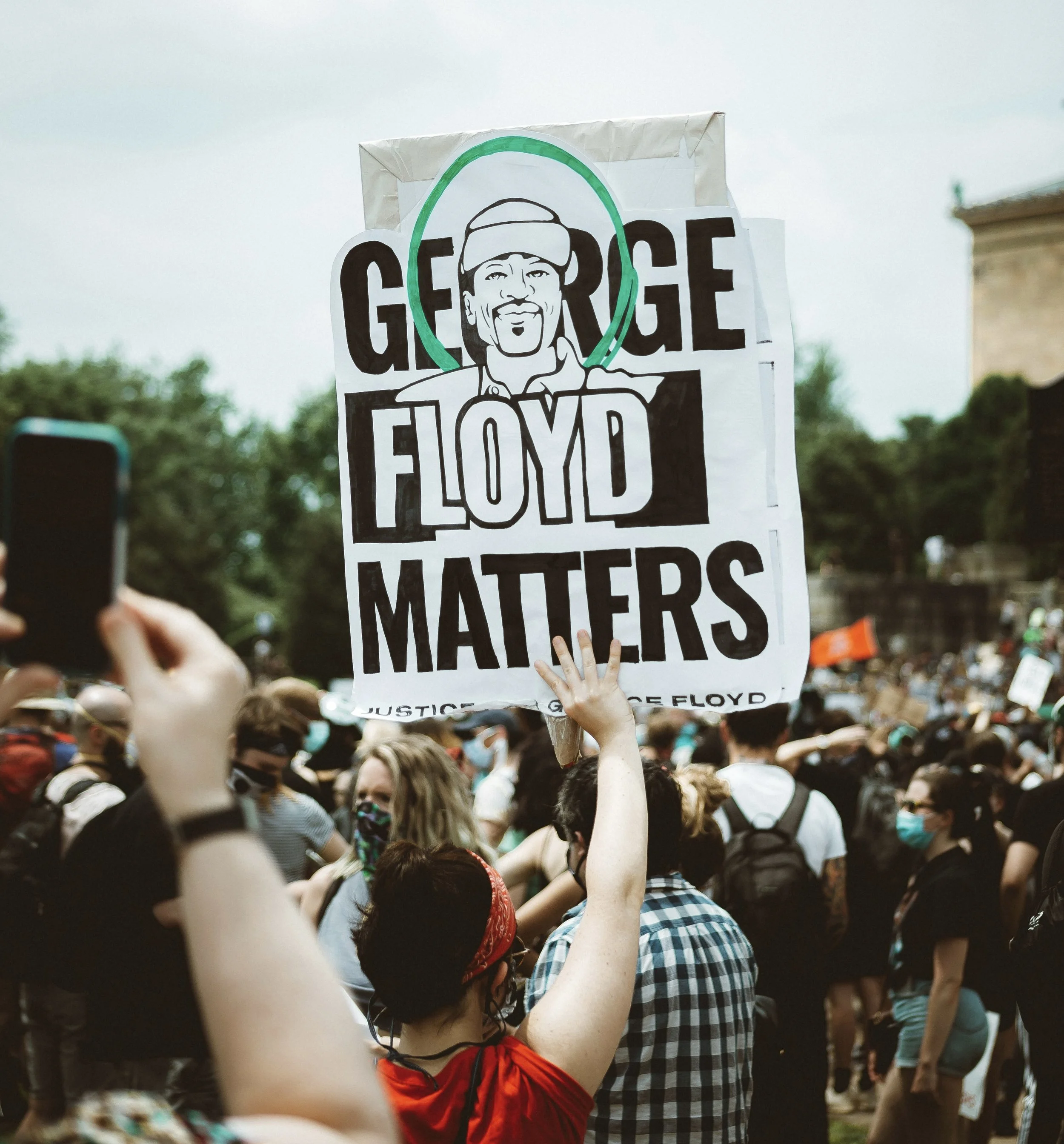
Following the murder of George Floyd in Minneapolis during the Covid summer of 2020, I never advocated for a Defund the Police! position. I believe that most who shouted that slogan didn’t mean get rid of police. First, I’m sure some did. Second, I think the slogan was exploited by those who sought to add fuel to the cultural wars that divide us. Finally, the slogan rightly proclaimed a general dissatisfaction with the status quo.
Here’s what I thought about the police in that 2020 summer. We need fewer cops. We need better trained cops. We need some police that don’t carry a weapon, but do have the education and experience to handle issues—like addiction and mental health concerns—that add complexity to alleged crimes and disturbances.
I continue to agree with two of my 2020 thoughts: better training and members of a police force who don’t use weapons.
Gladwell yanked the rug from beneath my “fewer cops” thought.
We need more police.
I’m going to give one of Gladwell’s examples of why we need more police. In order to be persuaded to change your mind like I was, you’ll need to read his book*. Or, in order to disagree with me, and to possibly refute Gladwell’s conclusions, you also should read his book*.
“Los Angeles is a city of 3.9 million people,” Gladwell wrote. He compared LA to Berlin, Germany: “Los Angeles covers a much larger area, but the population of the two cities are virtually identical.” [Berlin is currently 3.7 million.]
Los Angeles has 8,500 police officers to cover the city’s 469 square miles. For comparison purposes, Chicago’s population of 2.7 million has 12,000 police covering 234 square miles. Phoenix, with a little less than half LA’s population (1.6 million) has 2,500 cops on the force for its 518 square miles.
How many police officers do you think Berlin has for its 344 square miles?
3000
6000
12000
18000
And your answer is __________
I never would’ve guessed the answer would be eighteen-thousand police officers serving the capital of Germany. More than twice as many as L.A.
Not just more cops. A LOT more cops.
Why?
Gladwell gives many reasons, but I’ll summarize two that struck home with me: 1) response time and 2) the police being visible and involved in a neighborhood.
A few years ago, my wife and I took a pleasant morning walk in one of Fresno’s regional parks. When we returned to our car, we saw the smashed window at the same time. Several objects were taken, including a “priceless” Swiss Army knife I’d carried on scores of backpacks. That knife had been a good trail friend . . . and was now forever gone. The worst of the break-in was realizing that whomever had broken into the car had access to our home address by way of the registration info in the glove compartment. What if they were robbing our home as we stood beside our damaged car?
I didn’t think it a life-threatening emergency, so I hesitated about using 9-1-1. I called the “regular” line for the Fresno police. Maybe they would deem it an emergency? At least, I could talk with a professional who’d provide guidance. After a long wait, a computerized voice told me that my call would be answered in forty-five minutes. Please hold. I ended the call, feeling alone, scared, and helpless. With broken glass still scattered across the front seat, my wife and I were silent and anxious as we sped home.
Forty-five minutes!
Nothing was disturbed at home. But it took hours for us to calm down.
And that, Gladwell described, is what regularly happens across the United States, even when 9-1-1 is the initial call. Long delays. Spiraling frustration from those who made the call. When they arrive, the police likely having another crime awaiting them somewhere else in town.
Gladwell also highlights the importance of police officers becoming part of a community, of getting out of their cars to encounter residents on a regular basis. This leads to people trusting the police enough to share concerns before they become a crisis. Having a relationship with a neighborhood encourages police officers to become part of people’s lives rather than armed strangers only around when bad stuff happens.
I served a church in Fresno bordering an area that once had one of worst pockets of poverty in the United States. Less than a mile from a state university, it initially served students seeking cheap apartments. It quickly earned the nickname, Sin City. Over time, the population changed from students to immigrants and gangs and those unable to afford other locations. Crime was rampant. According to stories church members told me, there was a brief three-year period in the 1990s when a federal grant provided for community policing. Cops got out of their cars in “Sin City,” and met the residents. Crime dropped dramatically . . .
Until the grant money ran out.
Defund the police? I’ve changed. Fund the police . . . but in the right way.
Thanks for reading. More next week . . .
in Peace,
Larry Patten
*My number one goal for writing about Gladwell’s The American Way of Killing is to encourage you to get the book and read it.
Photo by Chris Henry on Unsplash