A Quarter of a Century Later
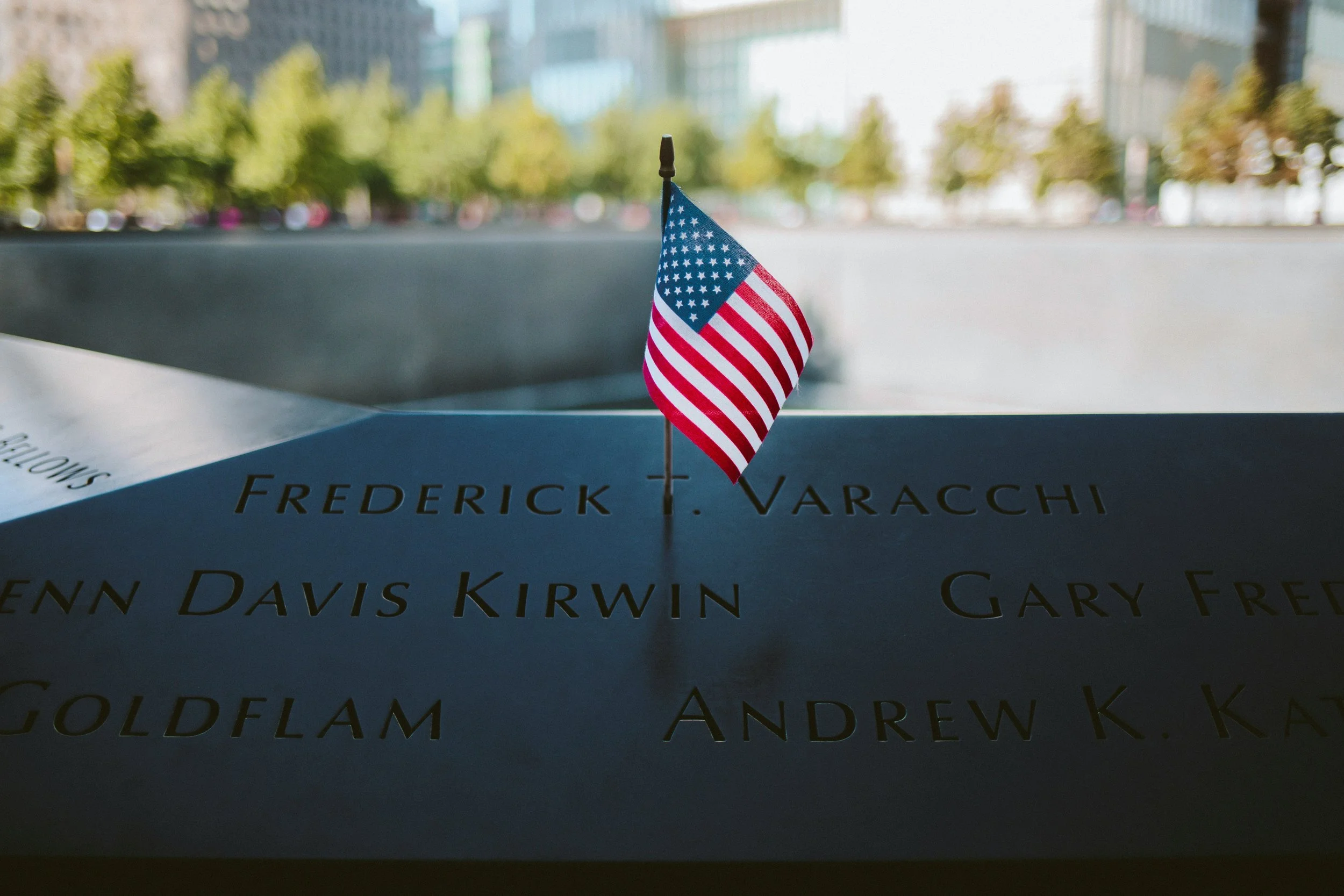
In just over two weeks from today, we will remember this:
“On September 11, 2001, nineteen terrorists associated with al-Qaeda, an Islamist extremist group, hijacked four commercial airplanes scheduled to fly from the East Coast to California. In a coordinated attack that turned the planes into weapons, the terrorists intentionally flew two of the planes into the Twin Towers of the World Trade Center . . .”
A quarter of a century has passed.
The memories I carry from that terrible morning include steering my car to the side of the road and calling my wife. She answered.
“Turn on the television,” I told her.
In 2001, I served as the senior pastor of a thriving congregation in Fresno, California. After talking with my wife, I continued to the church office. Before noon, I sent the staff home. We weren’t getting any work done. We were calling family or friends. Searching online for more news. Praying. Staring at the walls. Watching the endless loops of buildings falling and the clouds of dirt and smoke and shattered concrete swirling through the streets of New York like a shape-shifting beast.
That afternoon I helped plan an interfaith memorial service with fellow clergy. We came from various Christian denominations, rabbis from Jewish temples, Buddhist priests, Sikh elders, Native American leaders, and members of the local Islamic Mosque. In the evening, with hundreds of Fresno citizens gathered in an Armenian Presbyterian Church, I stood beside a friend who was Muslim, a member of the Islamic Cultural Center. In a somber, crowded sanctuary, our job was to read the names of the countries represented in the death toll. At that point, we had an incomplete record of where the dead were from, but it was already a long list.
I suspect nearly everyone in elementary school or older in 2001 recalls that day.
One of my recollections was being shoulder to shoulder with a Muslim in a sanctuary filled with worshippers of many faith traditions. My friend’s and mine’s voices mingled with quiet weeping, deep sighs, and long silences.
In the last week or so, this is one of the memes that appeared on a Facebook posting:
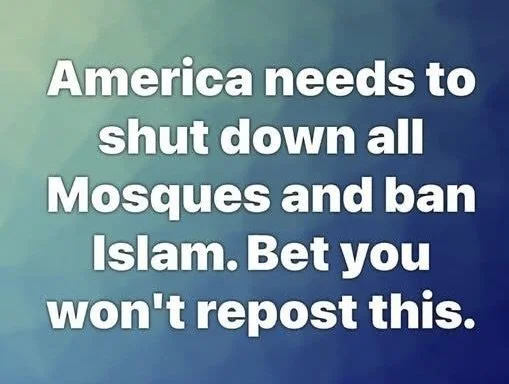
Twenty-five years ago, or yesterday, I wish I could say I’ve only seen a few memes or articles or video clips that are negative about Muslims. But I’d be lying.
The United States, arguably the world’s most politically and religiously diverse large-population nation, overflows with charity, acceptance, and mutual understanding.
And yet we also fester with so, so, so much hatred and fear. Against Jews. Against Muslims. Against Sikhs who we think are Muslims. Against atheists. Against . . . well, it can be a list as long or longer than the one I read in that sanctuary with my Muslim friend on the evening of September 11, 2001.
When has the hatred feeding our fears solved a problem for anyone?
Following the protests and riots after George Floyd’s murder in Minnesota, I had a conversation with a family member who lives in the Midwest. This person expressed strong feelings against the destruction occurring in Minneapolis and nationally. In particular, they blamed the Black Lives Matter organization for the conflict. I suggested it might be helpful to invite a local Black Lives Matter group to share a meal and dialog with the church my family member attended. They had no interest in that happening.
A few days ago, a person I know only on social media spoke about fear of Muslims. Since I know the city where this person lives, I wondered about nearby mosques. I searched online; there were several. As with my Midwestern family member, I suggested it could be a positive learning experience to make an appointment with one of the mosques’ imams. My social media “friend” never acknowledged my thoughts.
Perhaps my ideas were inappropriate or unwelcome advice or required too much effort.
Have our fears become strangely comforting? I “fear” that our hatred of the “other” is based more on what we don’t know instead of what we do know.
I think of the concept of jihad in Islam. It means struggle. Non-Muslims likely associate it with a holy struggle, an external war against those who don’t follow the Islamic faith. But jihad refers more to an internal struggle, a believer’s effort to overcome sin, to correct mistakes, to become a better person. In my Christian faith, and as an American citizen, I know that prior to (and even after) the Civil War, some claimed the Bible for justifying slavery. And some, with the same Bible, condemned slavery.
There is no celebration as we approach the quarter-century since one of the worst events in our nation’s history. It is rightly a day of memorials and grieving . . . and ongoing healing.
Thanks for reading. More next week . . .
in Peace,
Larry Patten
Top photo by Anthony on Unsplash
Bonus Quiz: Match the country (number to letter) with percentage of Muslims in population:
A. Australia. B. Iran. C. Kenya. D. Sweden. E. United States
1.1%
3.2%
7.1%
11.2%
99.8%
+++++++++++++++++
(Answers: A:2; B:5; C:4; D:3; E:1)